Showing posts with label india. Show all posts

Monday, 25 August 2014

Weavers of the Misty Mountains

All across India, handloom weaving is an age-old and traditional art form. The advent of mechanised looms more or less killed this art and it's no longer a much sought after occupation. Nevertheless, there are pockets all over where artisans are being encouraged to keep traditional weaving alive in a world where fashion is a fickle mistress.


Hills hidden by the clouds in Nagaland

In India's North East, especially Arunachal Pradesh, machine looms have not made their presence felt in the same manner as the rest of the country. Women across the region learn to weave at a very young age and become adept at handling the portable, small-ish looms known as backstrap or loin looms.(Watch this video).


Trademark colours of a Naga shawl


A backstrap loom in an Adi Gallong home
in Arunachal Pradesh

Unlike, the rest of India, the weavers in the North East are only women. Not some women or of certain tribes, but women in all the tribes seem to be well versed in the art of weaving. Nowhere did I come across any men involved in the process. 

In Arunachal Pradesh, one of the weavers from the Adi Gallong tribe said, "Cloth with a simple design and just one or two colours takes around 6-7 days to weave. But it's tiring work since I have to sit in a fixed position for hours on end. If the design is more complex, it takes much longer." She is one of the more enterprising women who weaves not just for her own household but also on custom orders from other households in her town who don't have the time or the inclination to weave anymore. 


A lady weaver in Arunachal Pradesh

The cloth woven by the women at home are worn on special occassions while for everyday wear, mainland India's (and I suspect China's) fabrics especially synthetics have made inroads into these interior regions. Demand for hand woven cotton or woollen cloth has naturally, fallen. (Read more here).

The government has set up centres for handloom weaving where people are taught the skill and supported with marketing and finance. But they are mostly in the towns which are far from the villages and not as accessible due to lack of public transport and not so great road conditions.


Looms at the Govt. run crafts centre
in Aalo, Arunachal Pradesh

Traders from the northern states of India bring in the coloured threads and yarns required to weave the beautiful fabrics. If the women dyed the threads in the past, it does not seem to be the practise anymore. It makes cotton more expensive while synthetics become more affordable.


A shop in Kohima selling woollen yarn and cotton threads

In Nagaland, since the larger towns are more accessible, there is a demand for their traditional weaves mostly from tourists. Besides the traditional shawls which the state is so famous for, there are bags, stoles, jackets etc also available. The drawback though is that the more intricate and elaborate cloth is not woven much. Less expensive and easier to market cloth is largely sold in all the souvenir shops.


A shawl of the Chakhesang tribe at the State Museum
in Kohima, Nagaland. The museum is the only place
you are likely to find an intricate shawl like this 
or
among a family's 
heirlooms.


Sling bags with traditional Naga motifs & designs


Hand-woven shawl with traditional Naga motifs

Hand-woven shawl in a traditional Naga design
Available at A Full Moon


A hand-woven scarf from Arunachal Pradesh
Available at A Full Moon


Given the area is not very accessible and there are innumerable other hardships to deal with, the people I met were very self-sufficient. They have to rely on their own skills and devices to make life a little easier for themselves. (Read more here).

Inspite of that, the people were so friendly and hospitable that it's unbelievably heart warming. A reason to go back again and again. Most definitely! 

Other posts on the North East in this blog: 

To market, to market 

How green is my valley 

North East of India 

Monday, 30 June 2014

Colours of India - ever changing, ever constant

http://www.indiamike.com/india-images/pictures/blue-city Jodhpur, Rajasthan
Jodhpur, Rajasthan resplendent in blue.
Photo credit: indiamike.com
India!

What's the first thing that comes to your mind when you hear the name India?

People... lots of people, saris, COLOURS, yoga & spiritualism, Indian hospitality, food... these are some of the oft repeated phrases. And the list goes on... 

As cliched as it might sound, India is a land of many, many colours. In fact, the brighter, the better. It's in our lives everywhere - the flowers in this sun-drenched land, the food, the cities, the festivals... Heck! we even have a festival of colours! 


holi, india, festival, http://intelligenttravel.nationalgeographic.com/2012/07/20/the-radar-worlds-10-wildest-parties-roam-like-a-roman-local-cuba-in-pictures/
Holi celebrations - the festival of colours
Photo credit: nationalgeographic.com

No wonder then, our love of all things colourful is reflected in our clothes, our jewellery and even in our homes. 

I decided to look around and see how colour inspires and dominates our life in India. Here's a glimpse of what I found. 


Flowers of many hues sold outside a temple complex, Bangalore


Paper lanterns make an appearance just before Diwali, Mumbai


Multi-coloured flags at a local festival, Goa 


A Gulmohar tree with its fiery blooms, Bangalore


The brightest yellow taxis, Kolkata :)


The vividly coloured clothes make a splash against a blue-grey backdrop


A night market selling the blingiest creations, Ahmedabad


Colourful bundles of thread & wool in a local market, Nagaland


Fresh produce you'll find in any local market


Purple Bougainvillea thriving in India's warm climate

So, how inspired are you to add more colour to your life? :)

Sunday, 8 June 2014

June 2014 - What's up at A Full Moon?

I didn't mean to post consecutively about the contest on A Full Moon. I didn't even realise that it's been a whole month since the previous contest. Time sure flies when you're having fun! :) 

I promise to post more of other things soon, but for now, here's info on the June contest. It started on June 5th - World Environment Day and is a short li'l quiz about the world we live in, especially the natural wonders we have right here in India. If you'd like to participate in our contest, check out the post on our Facebook page. Remember, the contest ends on June 11th (IST). 

Our products are sourced from local communities who handcraft gorgeous works of art & craft using natural materials and processes. It was only right that our contest for this month highlighted the beautiful world we live in (and generally take for granted).

At A Full Moon, we source our products directly from the artisans and from non-profits (NGOs) who work with local communities. Creating the gorgeous handcrafted products allow the artisans to earn a steady livelihood giving their families and themselves a better quality of life. 


Sunday, 20 April 2014

Black & Gold

We've recently added stoles in black with gold block prints to A Full Moon's collection. Perfect for an evening out or to add a dash of glamour to that elegant outfit you have on.

Photo credit: A Full Moon
These stoles are sourced from a non-profit in Southern India that works with underprivileged communities to empower them to access quality education, healthcare and better livelihood opportunities. 

The non-profit has enabled women's groups to train in traditional block printing techniques. The women belong to low income families and their skills at block printing give them a steady source of livelihood. It allows them to provide a better life for themselves and their families. You can check out our block printed collection here.

At A Full Moon, you will also find other personal and home accessories, in black and its combinations. 

Wall Art: Madhubani paintings in shades of black


Cushion cover embroidered by women from a nomadic community in India

Embroidered pouches by women's groups in India

Thick cotton scarves handwoven by women from the North-East of India

Journals made of handmade paper sourced from a non-profit that uses
'waste to wealth' technology to create recycled paper

Thursday, 28 November 2013

North East of India

Mon town Nagaland A Full Moon
A view of Mon town, Nagaland

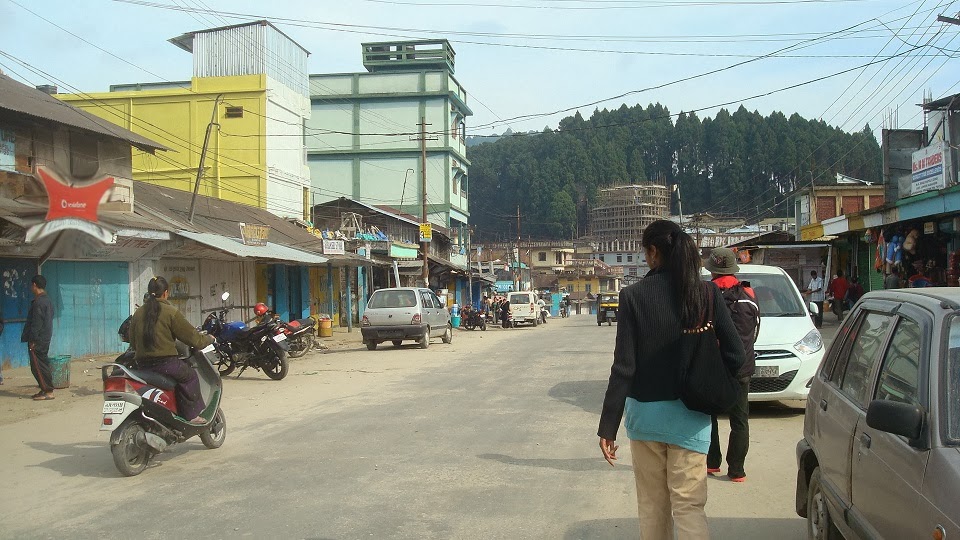
Recently, a friend and I travelled to some parts of North East India. Apart from the natural beauty that is so completely overwhelming, it was interesting to note the variety of work done by hand. There were handmade wraps of leaves to hold vegetables, woven bamboo containers that held oranges, bamboo baskets of all shapes and sizes, the matting for walls of tribal houses, thatched roofs and of course the beautiful cloth the region is famous for. 

The North Eastern region of India is not about 'wild and forgotten' lands and peoples (forgotten might still hold true). Modern machinery and goods have made its inroads into the villages and towns but demand is greater than supply. Instead of waiting for weeks or months for material to come over the mountains, from the nearby state of Assam, they continue to live as they have from time immemorial - self sufficiently.

A few photographs from the trip:


Ziro town Arunachal Pradesh A Full Moon
Ziro town, District HQ, Arunachal Pradesh


bamboo baskets arunachal pradesh assam A Full Moon
Woven baskets of bamboo used for all sorts of purposes

fruits vegetables baskets wraps A Full Moon
Woven containers and leaf wraps to hold produce & even live creatures.
Bottom left: hanging baskets hold crabs at a roadside market stall

hanging bridge bamboo Arunachal Pradesh A Full Moon
Left: Hanging bridge with bamboo footboards but steel ropes & netting, the newer version.
Right: Only bamboo hanging bridge built fully by hand, the older version

cloth handlooms portable looms north east india A Full Moon
The weaves created in almost every home with a smaller back-strap loom
(pink threads) or on larger hand looms mostly in govt. run craft centres

In and around the house - vessels from gourd to carry liquids;
backpack made of closely woven bamboo; walls of a home made of
bamboo matting and a ladder with deep notches for steps to climb up to the loft

Times are changing though, in larger towns, thatched roofs and walls of bamboo matting are giving way to concrete and tin roofs. Satellite dishes pop out of the tops of most houses and in the evenings as we walked along the homes, we could hear the latest soap operas and Bollywood tunes blaring from the television sets.  One can only hope that a modern outlook to life doesn't erode the better aspects of the traditional living all that easily.

Sunday, 6 October 2013

All blocked out

Printing with blocks in India is as old as time itself. OK, maybe I exaggerate, but it's pretty old nevertheless originating somewhere between the 8th and 12th century AD.

printing block wooden carving
Carving a printing block
(photo courtesy:
architecturetraveljournal.blogspot.in)


Designs are carved onto wooden blocks, mostly teak wood. Some designs more intricate than the others, the skill of the carver that much more precise. 
Wooden block
(photo courtesy: Barenforum.org)

Paisley design on wooden block
(photo courtesy:
onceuponatime.blogspot.com)


The technique most ubiquitous is the dye printing done straight away on the cloth. The cloth is tightly stretched on the tables and readied for printing. Blocks dipped in various dyes are used to print the design. If there are multiple colours, then printing is done colour by colour in layers. Here's an interesting post of a 'live demonstration' - Block- printed awesomeness. Now imagine the same across reams and reams of fabric block printed by hand in different parts of the country - Rajasthan, Gujarat, Andhra Pradesh, Madhya Pradesh and maybe even more. 

There are other techniques of printing, some even more painstaking and time-consuming with fabulous looking fabric as a result. Mud-resist block printing is one of them. The blocks are dipped into a mud-based paste and pressed onto the cloth. Once the paste dries, the cloth is dyed in the required colour. Where the mud-paste is printed, the cloth retains the original colour while the dye catches onto the rest of the cloth. Dabu printing - another blog post that best describes this process. :)

Today, block printing has evolved into a DIY craft that has permeated homes in India and abroad. Even Martha Stewart's website has an article on it. ;) The blocks are easily available in the markets and are used to print on paper (tags, cards, bags etc) and even henna onto the hands. A quick & easy shortcut.

I'll leave you with some pretty prints you will have certainly seen in stores (images courtesy: Google.com/images).

Buying hand printed fabrics encourage the survival of the art form, allowing traditional artisans to continue the age-old ways of creating beautiful designs while earning their livelihood. Overall, giving a boost to the local economy.
block printed fabric


Friday, 20 September 2013

Rock paintings

An early rock painting in India

As far back as 9000 BC, rock paintings have known to exist in India. Created using natural pigments, these paintings depicted the life of men as hunter-gatherers. These paintings extended from the Mesolithic (9000 - 3000 BC) to the early medieval historic period. More...

These could be seen as the pre-cursor to the folk & tribal art in India as we know it today which continues the tradition of painting scenes from life as well as the use of natural dyes and pigments. 

Mind boggling, isn't it? :)

(Image courtesy: wikipedia)

Sunday, 8 September 2013

A Full Moon - Who? What? Where?

A Full Moon is a retail space offering home and personal accessories drawn from traditional Indian arts. Exquisite paintings, colorful bags, elegant scarves and more… hand crafted by traditional artisans or by community based organisations. It includes an assortment of products that are sustainable i.e. eco-friendly and created from locally available material, providing local communities a regular source of livelihood.

At the moment our products are available online only via Facebook. We are in the process of putting up a full-fledged website to make your purchases easier. 

There are many places where you will find traditional arts and crafts to take home. Some types of crafts being more popular than the others either due to the artisans adapting to more modern tastes of the general public, easy access to markets or low maintenance etc. The larger tourist hubs in the country are filled with markets and stalls where you can pick up Indian gifts and souvenirs easily - Dilli Haat or Janpath in New Delhi; Dakshinachitra in Chennai; bazaars of Jaipur and many more. 


(image courtesy: usatoday.com)
In many regions of India, non-profits/ non-governmental organisations (NGOs) have been working with communities on issues of healthcare, education and livelihood options. Some of them work in the midst of local artisan communities who with their traditional knowledge and skills create objects for everyday use (e.g. bamboo craft, pottery) or for decorative purposes (Madhubani paintings, wall art). It helps keep traditional art forms alive as well as gives the communities a steady source of livelihood. 


(image courtesy: http://frommoontomoon.blogspot.in/)
A Full Moon sources its products from non-profits who work with community groups encouraging them in their traditional livelihood while also helping them get access to quality healthcare, education. Both rural and urban community groups are sources for these products. We also source our products directly from a few artisans. 

Currently, we are sourcing products from women's groups in Karnataka, Madhya Pradesh, Bihar and artisan communities in Bihar, West Bengal and Andhra Pradesh.

Saturday, 7 September 2013

Being fascinated

I have always been strangely compelled to pick up interesting pieces of art and craft that I came across whether it was in my travels or at exhibitions or stores. India has so many different types of crafts, that one can easily lose count and themselves. 

This interest of mine possibly has its roots in a nomadic childhood as my home was always filled with bric-a-brac from the different regions my family lived in. It was mostly was the same with friends and neighbours too, so the scenario did not seem very unusual. 

And, my fascination for India's arts and crafts has only grown over the years. Here are a few things, similar to the ones I grew up seeing around me. 

batik, india, art
Batik painting
Walnut wood carved partition


(images courtesy: Google.co.in/images)