Showing posts with label cloth. Show all posts

Thursday, 28 November 2013

North East of India

Mon town Nagaland A Full Moon
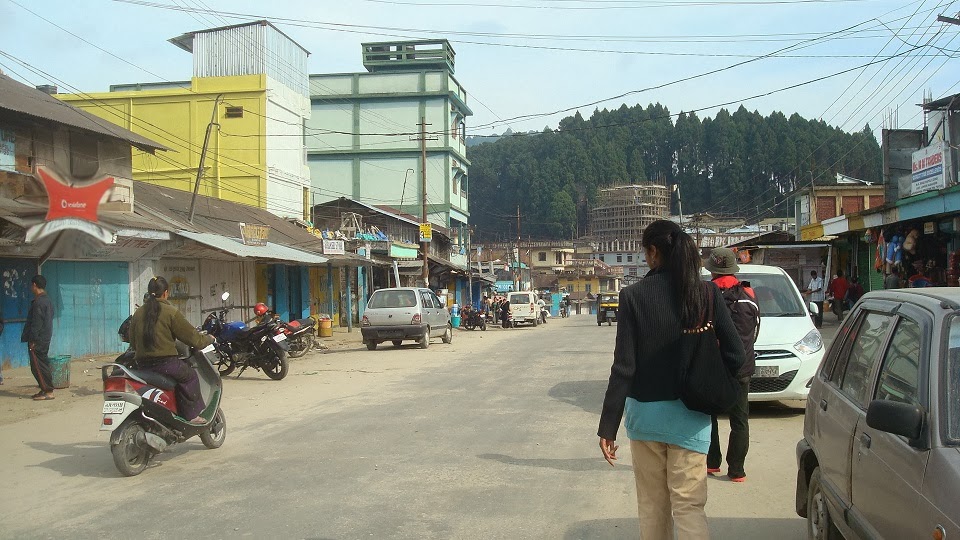
A view of Mon town, Nagaland

Recently, a friend and I travelled to some parts of North East India. Apart from the natural beauty that is so completely overwhelming, it was interesting to note the variety of work done by hand. There were handmade wraps of leaves to hold vegetables, woven bamboo containers that held oranges, bamboo baskets of all shapes and sizes, the matting for walls of tribal houses, thatched roofs and of course the beautiful cloth the region is famous for. 

The North Eastern region of India is not about 'wild and forgotten' lands and peoples (forgotten might still hold true). Modern machinery and goods have made its inroads into the villages and towns but demand is greater than supply. Instead of waiting for weeks or months for material to come over the mountains, from the nearby state of Assam, they continue to live as they have from time immemorial - self sufficiently.

A few photographs from the trip:

Ziro town Arunachal Pradesh A Full Moon
Ziro town, District HQ, Arunachal Pradesh


bamboo baskets arunachal pradesh assam A Full Moon
Woven baskets of bamboo used for all sorts of purposes

fruits vegetables baskets wraps A Full Moon
Woven containers and leaf wraps to hold produce & even live creatures.
Bottom left: hanging baskets hold crabs at a roadside market stall

hanging bridge bamboo Arunachal Pradesh A Full Moon
Left: Hanging bridge with bamboo footboards but steel ropes & netting, the newer version.
Right: Only bamboo hanging bridge built fully by hand, the older version

cloth handlooms portable looms north east india A Full Moon
The weaves created in almost every home with a smaller back-strap loom
(pink threads) or on larger hand looms mostly in govt. run craft centres

In and around the house - vessels from gourd to carry liquids;
backpack made of closely woven bamboo; walls of a home made of
bamboo matting and a ladder with deep notches for steps to climb up to the loft

Times are changing though, in larger towns, thatched roofs and walls of bamboo matting are giving way to concrete and tin roofs. Satellite dishes pop out of the tops of most houses and in the evenings as we walked along the homes, we could hear the latest soap operas and Bollywood tunes blaring from the television sets.  One can only hope that a modern outlook to life doesn't erode the better aspects of the traditional living all that easily.

Friday, 13 September 2013

Recycle, Reuse: How hard can it be?

India produces 14.6 million tonnes of waste paper every year, out of which only 27% is recovered. In more developed nations recovery is anywhere between 45% to 73%. 

Knowingly or otherwise, Indians have been recycling newspapers, magazines, notebooks for years now. It usually gets sold to the neighbourhood scrap dealer from where it proceeds further to be recycled into paper packets, wrappers for street snacks etc. But it mostly ends there. 


Paper wrappers for street food in India
(image courtesy: www.forkspoonnknife.com)
Conscious attempts to recycle and reuse paper though is limited unless there an immediate economic benefit is perceived. "If I am not paying (money) for it, who the hell cares?" is more or less the attitude. How many times have we, in our own offices, seen paper wastage around printer spaces, colleagues indifferently discarding paper printed on one side or unthinkingly printing multiple copies of a document unnecessarily? 

Companies might repeatedly request and encourage employees to reduce wastage and think before printing a document but it barely makes a dent. It makes you wonder how employees who work mainly on devices (laptops, tablets, phones) can manage to generate so much paper waste.

The immediate benefits of recycling paper, money-wise, might not be too obvious. But the extent of its long term benefits are unquestionable. 

Paper is produced mainly using wood pulp, water (lots & lots of it), chemicals and energy (electricity, fossil fuels). Producing recycled paper uses far lesser amounts of resources and reduces emissions (water and air pollution) drastically. 

But there's immense reason to hope. :)

In India, usage of recycled paper cellulose has risen from 7%in 1970 to 47% in 2011. This has reduced dependence on wood from 84% to 31% in the same years. 

Recycled paper can be made out of waste paper, cloth, cardboard too. And it's not only paper that is recycled. Even PET bottles, drink cans, tetrapaks are recycled into various products. 

Enough of the heavy stuff! Here are some easy and some fun things you can do to recycle and reduce waste.


Doodling in class or during meetings
1. Use paper printed on one-side for less important work. Send it to the shredder only if really required. 

2. Turn off the taps while washing, brushing, shaving etc. Even if it's a few minutes, leaving the water running, day after day, wastes over 25 gallons of water a month. Now multiply this by the number of people in your home. 

3. Turn off appliances and electronic items when not in use i.e. switch off at the electrical socket itself or shut them down completely. As long as it is on, there is always electricity being consumed to keep the machine running in 'sleep' mode

4. Use reusable plastic bags, or better still, cloth bags while grocery shopping. Funky ones are available everywhere now. 

5. Walk or cycle short distances - to the shops, to the park, to your friend's house. For larger distances, use public transport as far as possible or carpool. The more individually owned vehicles are plying the roads, the greater is the increase in fuel consumption and air pollution. 

5. Don't throw your old clothes or toys away. If you aren't handing it over to someone else, you can give them away to be recycled. There are a number of NGOs who recycle them in various ways. It's certainly an excuse to get yourself a whole new set. :)

6. Gift your friends 'green' products for special occassions - a pottedd plant, recycled paper stationery, upcycled jewellery, naturally made cosmetics, clothes & other products made of organic or natural fibres. 


Potted plant

www.facebook.com/afullmoonstore
Recycled paper notebook

Recycled paper beads


6. Support an environmental cause - in your neighbourhood, your country or anywhere in the world.

There are many, many options, if you're but willing to look for them. After all, there is only one earth and we live in it. 

(info reference: www.thehindu.com; www.dosomething.org & images courtesy: www.google.co.in/images)